Plant Identification
Classification gives us a starting point when identifying an unfamiliar plant. Its visible features can help us compare it with other plants in the same family.
FLORAHUB EXPLORE
Discover different plant families and learn about their characteristics, habitats, origins, genera and species. Start with a broad plant group and explore the plants that belong to it.
PLANT CLASSIFICATION
Plant classification helps us organise plants into groups according to their relationships and shared characteristics. A family is a classification level that contains related genera. Each genus can contain one or more species.
A plant family is a group of related plants that share features inherited through their evolutionary history. Botanists study features such as leaves, flowers, fruits and other characteristics to help identify and classify plants.
WHY IT MATTERS
Plant families make it easier to study and compare the large variety of plants found around us.
Classification gives us a starting point when identifying an unfamiliar plant. Its visible features can help us compare it with other plants in the same family.
Learning about families helps us organise plant information and understand how different genera and species are grouped.
Distribution records help us learn where plants have been observed. These records can support research into plant diversity and geographical distribution.
Reliable information about plant identity and distribution can help researchers understand plant diversity and identify areas that may need further study.
FAMILY COLLECTION
FloraHub introduces two plant families: Arecaceae and Zingiberaceae. Select a card to learn about its features, habitat and example plants.

FAMILY
FAMILY
Arecaceae is the palm family. Its members include a wide range of palms that vary in size and growth habit. Some grow as single-stemmed trees, while others grow in clusters or climb with the support of surrounding vegetation.
Palms are important in many tropical environments. Different species can provide food, shelter and useful plant materials. Areca and Calamus are examples of genera included in this family.
FAMILY
FAMILY
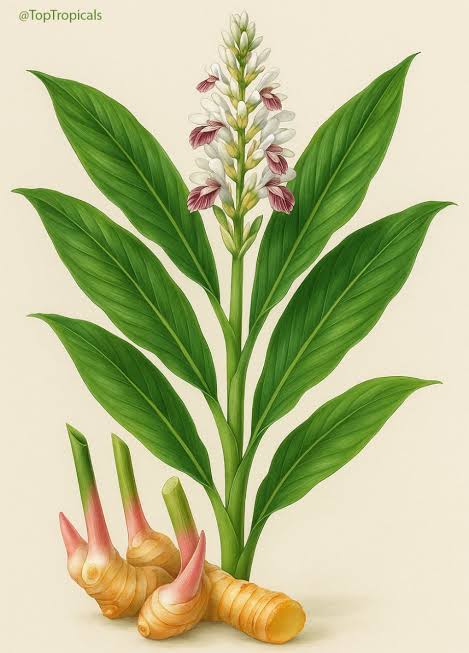
Zingiberaceae is the ginger family. Many of its members are herbaceous plants that grow from underground rhizomes. Their leaves, flowers and growth patterns vary between genera and species.
Some plants in this family are used as food, spices or ornamental plants. Ginger and galangal are familiar examples. Alpinia and Zingiber are two genera included in this family.
FAMILY SUMMARY
Although both families include plants found in tropical environments, they have different growth habits and features.
| Family | Common Name | Main Features | Example Genera | Next Step |
|---|---|---|---|---|
| Arecaceae | Palm Family | Includes many palm species with different growth habits | Areca, Calamus | View Genera |
| Zingiberaceae | Ginger Family | Mostly herbaceous plants, often with rhizomes | Alpinia, Zingiber | View Genera |